Are Stick-On Tiles Waterproof? What You Need to Know for Bathrooms & Wet Areas
Share
Stick-on tiles are water-resistant, not waterproof — and that distinction decides where you can install them. STA's Vinyl and Composite ranges are built to handle splashes, spills and humidity in bathrooms, kitchens and laundries. Full submersion or constant direct water flow, like inside a shower recess, is a different job and needs extra sealing steps.
What's the difference between water-resistant and waterproof?
Water-resistant means the tile surface won't absorb moisture, stain or warp when it's splashed, wiped down or exposed to steam. Waterproof means a surface can sit under constant, direct water flow indefinitely with zero risk of water getting behind it. STA's Vinyl and Composite tiles are water-resistant by design — the PVC material itself doesn't soak up moisture. What determines whether water gets behind the tile is the seal at the joins and edges, which is why installation technique matters as much as the material.
Where can you install stick-on tiles?
STA's Vinyl and Composite tiles are suitable for bathroom splashbacks, kitchen splashbacks, laundry walls, and powder rooms — anywhere that sees splashes, spills or humidity but not sustained water flow. The Vinyl Floor Plank range carries the same water-resistant rating and is suitable for bathroom and laundry floors, powder rooms, and other wet-area floors.
Can you install stick-on tiles in a shower?
Direct installation inside a shower recess sits outside STA's standard installation guidelines, because constant water exposure and heat can affect the adhesive over time. If you want to install in a shower anyway, three steps make it viable:
- Seal every perimeter edge and corner with waterproof silicone before use.
- Run silicone (or epoxy grout, for Composite tiles) along every join to stop water getting underneath.
- Accept that this is a discretionary install — it's outside STA's standard guidelines, so it's done at the installer's own risk.
Thousands of customers have installed STA tiles successfully in bathrooms and wet zones using proper sealing. Shower recesses just need the extra step.
Do you need to seal stick-on tiles for a fully water-resistant finish?
Yes. Even outside a shower, running all-purpose silicone along every edge — where the tile meets the wall, the benchtop, or another tile run — gives you the most seamless, water-resistant finish. This is standard practice for splashbacks and wet-area walls, not just an optional extra.
Which range should you choose for a wet area?
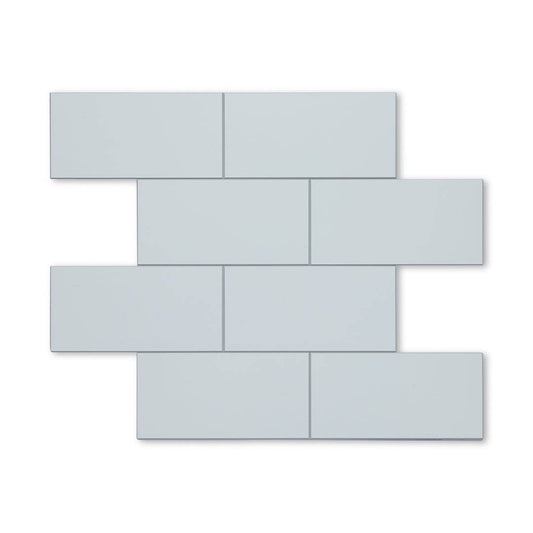
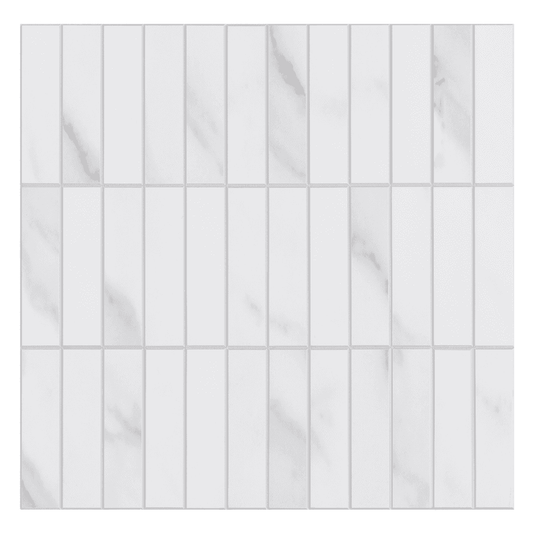
For walls: the Vinyl & Composite Wall Tiles range. For floors: the Vinyl Floor Planks, which pair the same water-resistant material with a slip-resistant surface — relevant if the floor will ever be walked on wet. Not sure which finish suits your space? Order a sample kit before you commit to a full room.
Shop This Style
Sample Kit - Composite Tiles
From $29.95 — test our most water-resistant range at home before you order
View Product →